January272012
ON THE ROAD WITH BOB HOLMAN PREMIERES FEBRUARY 1ST! The show is airing on LinkTV which is available on local cable channels, online, and on DirectTV channel 375 and Dish Network channel 9410. EPISODE 1: THE GRIOTS OF WEST AFRICA (Feb. 1). EPISODE 2: TIMBUKTU TO THE DOGONS (Feb. 8). EPISODE 3: ISRAEL AND THE WEST BANK (Feb. 15). linktv.org

ON THE ROAD WITH BOB HOLMAN PREMIERES FEBRUARY 1ST! The show is airing on LinkTV which is available on local cable channels, online, and on DirectTV channel 375 and Dish Network channel 9410. EPISODE 1: THE GRIOTS OF WEST AFRICA (Feb. 1). EPISODE 2: TIMBUKTU TO THE DOGONS (Feb. 8). EPISODE 3: ISRAEL AND THE WEST BANK (Feb. 15). linktv.org

6PM

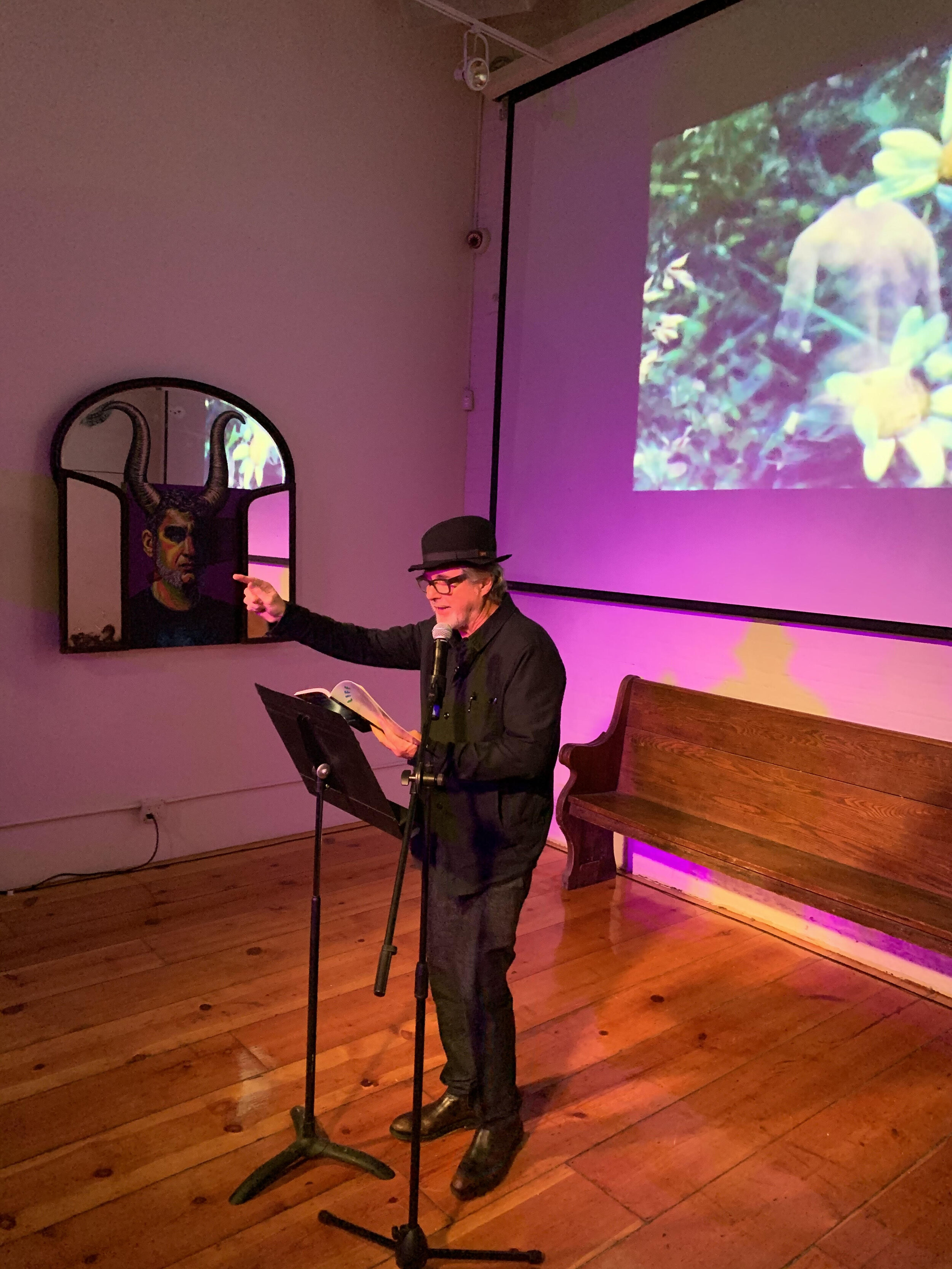
DID YOU KNOW that before Capt. John Smith even went to Jamestown he spent years roaming East Europe and Turkey? Then he wrote the world’s first autobiography about his adventures. That’s the basis of the play I’m working (I play Smith), a small preview of which which will be performed tonight. My co-creators are Virlana Tkacz, director of Yara Arts Project and a theater visionary, and Julian Kytsasaty, world’s greatest bandura player, he of the angelic voice. Also on the bill is my daughter Sophie, doing “Box,” which she created and performs… Lots of other great works too! http://www.brama.com/yara/newsletter/index.htm

January262012
11AM

Last Night on the Niger

It couldn’t be. But it looked like a rainstorm ahead. The river got choppy. Whitecaps appeared. The temperature dropped. The air turned to milk. I had Beatriz and Lamont start shooting and they shot for an entire tape, an hour. We were moving through memory. Inside a cloud. The trees along the river were shaking. It was the last night before Timbuktu.

The sun came down like an iron cover on a pot. Suddenly darker than dark. We huddled around the table for warmth – no food till new land. The Captain’s flashlight revealed nothing but swirling wisps of fog. The moon ghosted up, and the familiar two stars that have been her accompaniment on this trip, but otherwise the sky and river merged into a black tunnel. It was very late, we were very hungry, very cold, freezing, a few miles from the Sahara.

But the Muse calls. I turn on my headlight to jot some words. “Fermez la lumiere!” bellows the Captain. “Turn off your light! It’s dangerous!” “What’s the danger?” I reply, trying to get some perspective. Silence. Crocodiles? Hippos? Are we lost? I see a flashlight on the left shore. “A gauche!” I shout, half a joke, half hoping the Captain will heed my advice and pull us in to safe haven.

This is supposed to be the time to travel by water to Timbuktu – the river at its highest. Much of the year the trip is impossible – the Niger dries up as it bends (“le boucle,” the Buckle) south at the Sahara. Thirty years ago the Niger flowed through Timbuktu. Now it’s almost twenty kilometers away. Desertification for real.

But tonight the river’s height has changed the shoreline. The fog cloud has turned things around. The high water has caused some of the riverfront villages to be abandoned. Where can we put in for the night? Where is the shore? We cross the broad river, searching. Our jokes have subsided. For almost two hours the Captain stands at the prow, making small hand gestures to the man at the wheel. This way, that.

Suddenly we are ashore, a lonely sand spit, wind blowing mercilessly. The lone tree explodes in a cacophony of scolding and we name the place “Monkey Island.” As the crew sets up the tents, Karamo goes ashore to record the madness. It’s not monkeys but egrets, huddling themselves, reproaching us for invading their sorry dune.

We take dinner on the boat. Last night had been full of stories and imitations of each other.  Tonight,  our last night on the Niger, is full of tent-shaking monsters – grit teeth to stay on ground. Sand blowing everywhere, somehow getting inside the tents. Frantic dreams. By morning, my sandals, left outside,   must be dug out.

We break camp. Two tents blow into the Niger and are fished out with poles. We cast off at daybreak. We’re too cold and tired to shoot.

The blankets we’d bought in Niafunke became our outerwear. All we can do is make time downstream. We are promised a Tuareg village; the one we find is deserted. Filled with loneliness. Finally, late afternoon, we enter Timbuktu like most: tired, dusty, bumping along in an open bache (small truck), wrapped in rags.

Bob Holman is the host of a new travel series focused on endangered languages called ON THE ROAD WITH BOB HOLMAN on LINK TV. He traveled to West Africa, Middle East and Asia and these are his blog stories from his travels. More information at http://www.rattapallax.com/blog/on_the_road/

January252012

On Board the Just Pinasse

I ask Amadou 2 what our pinasse is called. “Just Pinasse.” So be it

The Niger slips under. The kora plays. Lamont is extending his 1500 page autobiography, wearing new pants and shirt. Bea is sleeping. All are thrilled with our toilet: a hole in the boat with some 4 foot walls around it, a door with a sliding bolt.

We have some Chinese tea. “Papa would like this,” Karamo says. Yes, if he’d known there would be tea maybe he would have stayed with us. Bambara is still the prevalent language, Fulani has become Peul, Wolof has disappeared, add Bozo, Tuareg, Songhay, Dogon, Bela. The energy is flowing the poem. The Niger is placid, ripe, full of possibility. We’ll be at Lac Debo tonight. Fresh capitaine sounds good too. The kora sounds like Papa. Sure he’s here. I’ll find Ted Joans too. This is Bob Holman, on board the Just Pinasse, “On the Griot Trail.”

Bob Holman is the host of a new travel series focused on endangered languages called ON THE ROAD WITH BOB HOLMAN on LINK TV. He traveled to West Africa, Middle East and Asia and these are his blog stories from his travels. More information at http://www.rattapallax.com/blog/on_the_road/

2PM

Mopti

We take a room at the simple, slightly uncomfortable Campement, immediately head in to town to shoot the port sunset. Amazing site sight, boats crisscrossing, sunset, boys poling along. Head over to renowned Bar Bozo (Bozos being the big fisher tribe in this locale) for the “best sunset in Mopti.” Stunning, ancient, exciting, full of quotidian beauty. That is if your quotidian happens to be Mopti, Mali. (BTW, if you’re following the Blog closely you’ll know about our police and border difficulties. We did have a run-in with some police above Bamako, but there are no internal border crossings in Mali, and the few police we see just give Abdullah a nod.)

We have a fine meal, Restaurant Sigui, of three different kinds of capitaine, the big local fish: en brochette (yummy), a Bamako (with bananas and yucca) (m’yumyum), Venise (broiled and covered with a wonderfully piquant red sauce) (c’est tres bon). Bea gets involved in a bidding war for a blanket with three local sheepherders. She compares softness, size, design. The bidding starts at 50,000 CFA (French African Francs, about 500 = $1). Now Bea is down to two, and when one finally hits the 20,000 mark: Yes! says Ms Bea, hands over the cash. Cuddling her new purchase, she says, “How warm I will be in Timbuktu!” at which point the losing seller looks at her plaintively, “15,000?”

By now (9:45), it seems all places to access the internet in Mopti are closed. Bea asks at the Campement, where the clerk wants to know if she really needs it. Bien sur. So we walk over to a group of guys having a beer on the patio and the desk clerk relays our request, in Bambara. One fellow gets up and motions for us to follow. Which we do, all the way to his house/office, part of a travel agency it seems, and we spend an hour doing the basics, mainly informing people we’ll be Off the Grid for 2-3 days. Fitful sleep, fleeting dreams.

Bob Holman is the host of a new travel series focused on endangered languages called ON THE ROAD WITH BOB HOLMAN on LINK TV. He traveled to West Africa, Middle East and Asia and these are his blog stories from his travels. More information at http://www.rattapallax.com/blog/on_the_road/

January242012

Senosa: the Gold Earrings

After the shoot we head 12 kilometers North to Senosa, the village of the huge golden earrings. So big, so heavy, that women have to wear a headpiece to hold them up, keep their ears from tearing. It’s a National Geographic village, naked kids, animals clucking and baa-ing everywhere, dusty red brown brick mud. And a lot of joy, hair-braiding and yelling. Albert leads us to the compound, but the patriarch is in Djenne and his Wife cannot find the precious heirlooms. So we go to Wife Number Two, who has her earrings safely stowed exactly where she left them. Alas, they’re not so big as #1’s, but they’re plenty big all the same.

After lunch Abdul gives us another taste of his brilliant driving and the next thing we’re in not Mopti but Sevare, some fifteen minutes outside Mopti. This is not the program, which is for us to be in Mopti for Karamo’s visa extension and shooting, and to make long story short we all decide to head into town, where Lamont’s legality is extended for a month, simply and with good humor by policeman and woman. She does the actual stamping, which is like the Invention of Printing: place 3x2 stamp in ancient red inkpad, rock, lift. Jam down on passport page and push in with two hands. ‘Tis done.

ON THE ROAD WITH BOB HOLMAN PREMIERES FEBRUARY 1ST! The show is airing on LinkTV which is available on local cable channels, online, and on DirectTV channel 375 and Dish Network channel 9410. EPISODE 1: THE GRIOTS OF WEST AFRICA (Feb. 1). EPISODE 2: TIMBUKTU TO THE DOGONS (Feb. 8). EPISODE 3: ISRAEL AND THE WEST BANK (Feb. 15). ww.linktv.org, www.bobholman.com/road, www.rattapallax.com/blog/on_the_road

← Older entries Page 1 of 10